Scared of the Dentist? Why Dental Anxiety Happens and 9 Ways to Make Your Next Visit Easier
 Dr. Kavita Bhat KumarSeptember 20269 min read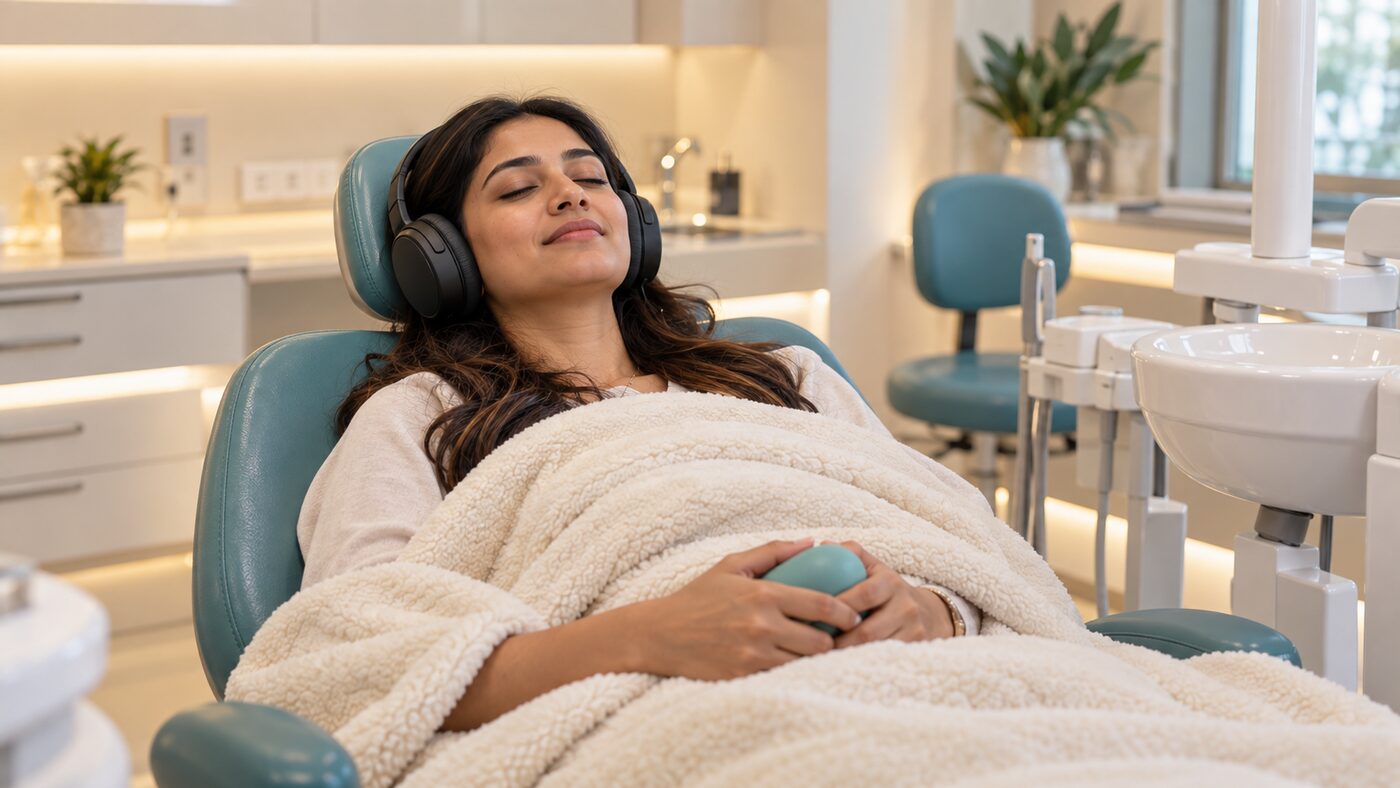
In this guide
Let us start with something most dentists do not say out loud: being nervous about the dentist is completely normal.
The sound of the drill. The bright light in your eyes. Lying back with your mouth open while someone you barely know works inside it. The feeling that you cannot talk, cannot see what is happening, and cannot quite say stop. For many people, that is enough to keep postponing a check-up for months, sometimes years.
If that sounds like you, this guide is for you. It explains why dental anxiety happens, how it quietly makes dental problems worse, and nine practical things that genuinely make visits easier. No lectures, no "just be brave".
You Are Not Alone: How Common Dental Anxiety Really Is
A large systematic review and meta-analysis combined data from more than 72,000 adults across the world. It estimated that:
- 15.3 percent of adults have dental fear and anxiety. That is roughly one in every seven people.
- 12.4 percent have a high level of dental fear.
- 3.3 percent have severe dental fear, the level usually described as dental phobia.
The same review found that dental fear is more common among women and younger adults. Individual studies report very different numbers depending on the country and how anxiety is measured, and some clinic-based studies find that a much larger share of patients feel at least some anxiety before treatment.
In other words, if you feel your heart beat faster in the waiting room, a good number of the other people sitting there probably do too.
Why Does Dental Anxiety Happen?
Dental anxiety rarely comes from nowhere. The most common reasons people give are:
- A bad experience in the past. Often from childhood: a painful filling, a rushed extraction, or a dentist who scolded instead of explained.
- Fear of pain. Especially of injections and drilling.
- Loss of control. You are lying down, you cannot speak properly, and you cannot see what is happening.
- The sounds and smells. The drill, the suction, the clinical smell. For many people, these alone trigger anxiety.
- Embarrassment. Worry about the state of your teeth, or about being judged for not visiting in a long time.
- Fear of the unknown. Not knowing what the treatment involves, how long it will take, or what it will cost.
Notice that most of these are not really about the treatment itself. They are about how the visit feels. That is good news, because how a visit feels can be changed.

How Dental Anxiety Quietly Damages Your Teeth
Here is the difficult part. Avoiding the dentist does not make dental problems go away. It usually makes them bigger.
Oral disease is already extremely common. According to the World Health Organization's Global Oral Health Status Report, oral diseases affect about 3.5 billion people worldwide. Untreated tooth decay alone affects an estimated 2.5 billion people, and severe gum disease, a major cause of tooth loss, affects around 1 billion.
When anxiety keeps you away, a predictable cycle begins. Researchers describe how people with severe dental anxiety tend to avoid appointments, which compromises their oral health, increases the risk of dental pain, and leads to more invasive treatment later.
In real life, it looks like this:
- A small cavity that needed a 20-minute tooth-coloured filling grows until it needs a root canal.
- Mild gum bleeding that needed a cleaning becomes gum disease that loosens teeth.
- A cracked tooth that could have been saved with a crown ends up being removed, and now needs a dental implant.
Each step makes the next visit bigger and more stressful, which makes you want to avoid it even more. Breaking the cycle early is the kindest thing you can do for yourself.
9 Practical Ways to Make Your Next Dental Visit Easier
1. Tell the clinic you are anxious, before you arrive
Mention it when you book. A good clinic will plan a slightly longer appointment, avoid rushing you, and explain every step. You are not being difficult. You are giving the team the information they need to look after you properly.
2. Start with a "talk only" consultation
You do not have to agree to any treatment on the first visit. Ask for a consultation where the dentist simply looks, explains what they see, and answers your questions. Knowing what is actually going on removes a huge part of the fear.
3. Agree on a stop signal
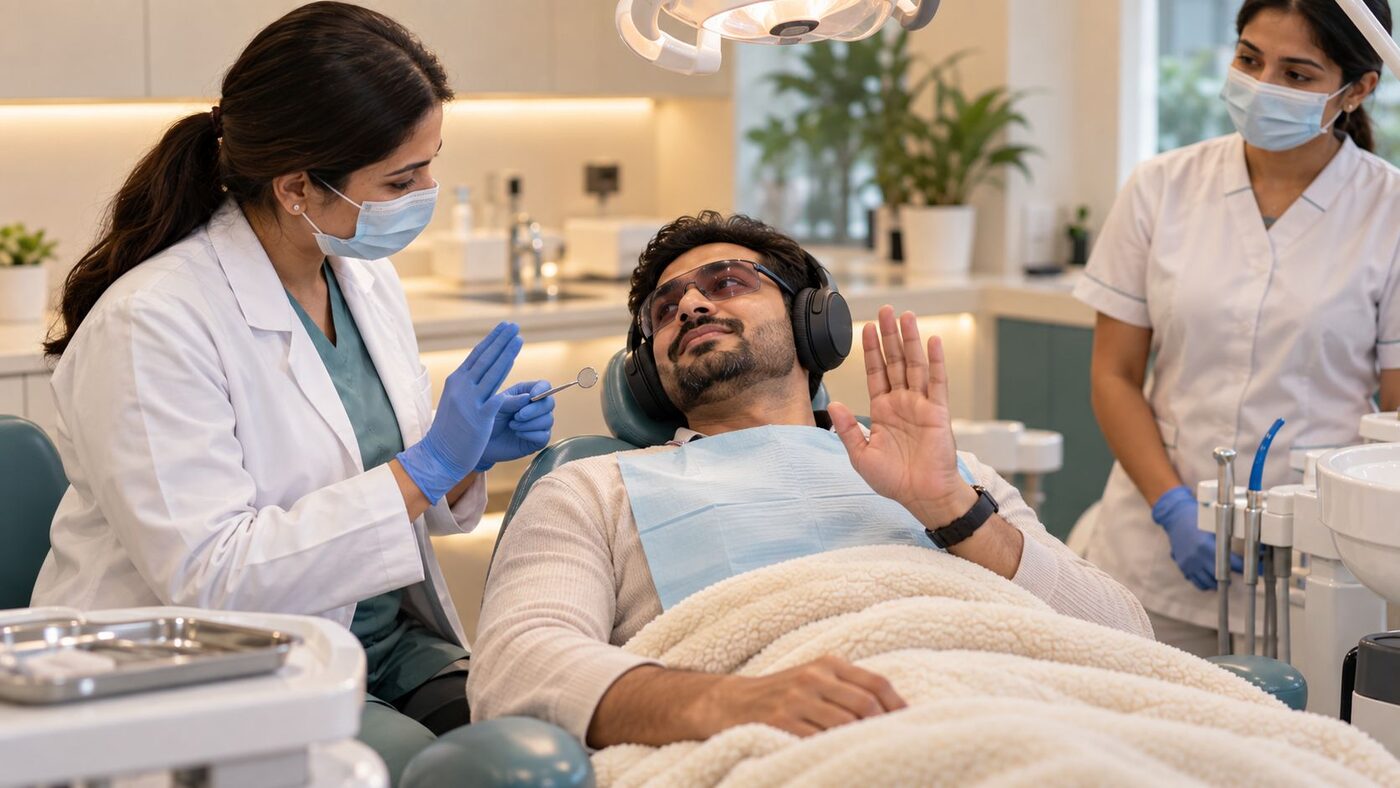
Before treatment starts, agree on a simple signal, like raising your left hand, that means "please pause". Knowing you can stop at any time gives back the sense of control that makes dental visits feel so helpless.
4. Block out the sound
For many people, the drill is the worst part. Noise-cancelling earphones with your own music, a podcast, or even silence make a remarkable difference. At Designer Smiles, noise-cancelling earphones and music of your choice are part of our Signature Comfort Menu.
5. Ask for the numbing gel first
Most of the fear around injections is about the pinch. A topical numbing gel applied first makes the injection itself much more comfortable. Do not hesitate to ask.
6. Choose gentler technology where possible
Modern dentistry offers gentler options for many treatments. Laser dentistry can reduce bleeding, swelling and discomfort in some gum procedures, and low level laser therapy can help healing afterwards. Composite bonding for chips and small gaps usually needs no injection and no drilling at all.
7. Book the right time of day
If you tend to worry all day before an appointment, book the first slot in the morning. Less waiting means less time for anxiety to build.
8. Bring comfort with you, or choose a clinic that provides it
A soft blanket, something to hold, a way to rest your eyes from the bright light. These sound small, but they help your body stay relaxed. Some clinics now offer these as standard, which is exactly why we created a comfort menu with blankets, eye masks, tinted glasses, stress balls and neck pillows.
9. Plan something good for afterwards
Give your brain a reason to associate the dentist with something pleasant. A favourite meal, a walk, a small treat. At Designer Smiles, every visit ends with a warm towel and a gentle neck massage, and after surgical procedures, a cup of ice cream. Patients tell us it changes how they remember the whole visit.
What Makes a Clinic Good for Nervous Patients?
If dental anxiety has kept you away, choosing the right clinic matters as much as the treatment. Look for:
- Private treatment rooms, not open floors where you can see and hear other patients.
- A dentist who explains before acting, and asks before starting each step.
- No pressure to agree to treatment on the first visit.
- Transparent pricing, so money is not another source of worry. Many clinics now publish starting prices online.
- Comfort as part of care, not an afterthought.
- Proper hygiene standards, such as ISO 9001:2015 certification.
- Real reviews that mention anxiety or pain. Other nervous patients are the most honest guide.
At Designer Smiles in Vile Parle East, Dr. Kavita Bhat Kumar has been caring for patients since 1995, and many of our patients first came in nervous, sometimes after years of avoiding dental care. Our approach is simple: explain everything first, never rush anyone out of the chair, and treat comfort as part of the treatment, not a luxury.
A Note for Parents
Dental anxiety very often begins in childhood. A few habits help children grow up without it:
- Start dental visits early, before there is a problem, so the first experience is a friendly check-up.
- Avoid using the dentist as a threat ("If you eat chocolate, the dentist will give you an injection").
- Do not pass on your own fear. Children notice when you are nervous.
- Praise them for sitting in the chair, not just for "being brave".
The Bottom Line
Dental anxiety is common, understandable, and not something to be ashamed of. But letting it keep you away from the dentist usually turns small problems into big ones. The most important step is often the smallest one: a single, pressure-free visit to a clinic that takes your comfort seriously.
When you are ready, we are here, with the earphones, the blanket, and the warm towel waiting.
This article is for general information. If you have severe dental phobia, please mention it when you book so the team can plan your visit around your needs.
Frequently Asked Questions
Yes. Research estimates that about 15 percent of adults worldwide have dental fear and anxiety, and around 3 percent have severe dental phobia. It is more common in women and younger adults.
Talk to Dr. Kavita about your smile.
Dr. Kavita Bhat Kumar
Founder, Designer Smiles · 30+ years of clinical experience
Trained in aesthetic dentistry in Germany, Dr. Kavita has been caring for patients in Vile Parle East since 1995.
About Dr. Kavita →Keep reading
Dental Implants
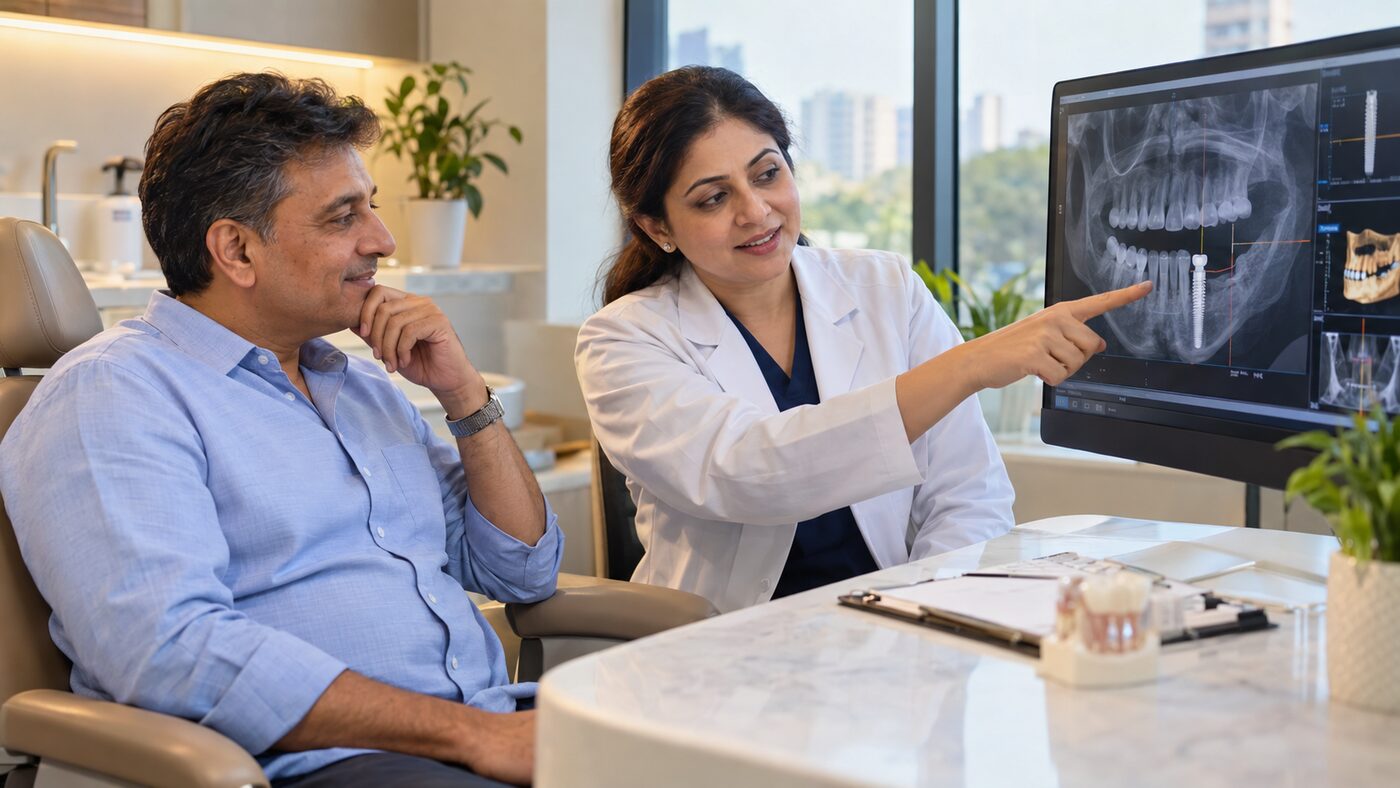
Dental Implants in Mumbai: Cost, Types, Success Rate and What to Actually Expect
If you are reading this, there is a good chance you have a gap in your smile, a tooth that is about to be removed, or a denture that has never quite felt right. You have probably also heard three very different things about dental implants: that they are the best tooth replacement available, that they are painful, and that they cost a fortune.
September 2026 · 11 min read
Cosmetic Dentistry
Smile Makeover in Mumbai: Treatments, Cost, Timeline and How to Plan Yours
Most people who come in asking about a smile makeover start the conversation the same way. "It's not a big problem, but…" and then they point to it. A chipped front tooth. A gap they have hidden in photos since college.
September 2026 · 11 min read