Crooked Teeth Treatment for Adults: How to Fix Crooked Teeth With or Without Braces
 By Dr. Kavita Bhat Kumar10 min read
In this guide
- Quick answer
- Why do teeth become crooked?
- Do crooked teeth actually matter, or is it just looks?
- Option 1: Invisalign clear aligners
- Option 2: Braces
- Option 3: Veneers
- Option 4: Composite bonding
- Option 5: The combination approach
- Side by side comparison
- How to fix crooked teeth without braces
- Which treatment is right for you?
- Is it too late to straighten teeth as an adult?
- How teeth straightening works at Designer Smiles
- Ready for a straighter smile?
A lot of adults have the same story.
Their teeth were a little crooked as a kid. Braces weren't done, or they were done and the teeth slowly moved back. Years went by. And now, at 28 or 35 or 45, they've started noticing it more. In selfies. In video calls. In the way they smile with their lips closed without thinking about it.
Then comes the thought: "Isn't it too late for this now?"
It isn't. Adults straighten their teeth all the time, and today there are far more options than metal braces. Some don't involve braces at all.
This guide explains why teeth become crooked, every treatment option for adults, how long each one takes, what it costs, and how to choose.
Why do teeth become crooked?
There usually isn't one single reason. Common causes include:
- Not enough space in the jaw. Teeth are too big for the jaw, so they overlap or twist. This is called crowding.
- Genetics. Jaw size and tooth size often run in families.
- Childhood habits. Thumb sucking, using a pacifier for a long time, or tongue thrusting.
- Early loss of baby teeth. Other teeth drift into the gap.
- Wisdom teeth and natural ageing. Teeth keep shifting slightly throughout life, and the lower front teeth often get more crowded with age.
- Not wearing retainers after braces. One of the most common reasons adults come to us.
- Missing teeth. Neighbouring teeth tilt into the empty space.
- Gum disease. Weak gums and bone let teeth move.
The Cleveland Clinic's guide to malocclusion explains these causes in more detail.
Do crooked teeth actually matter, or is it just looks?
For many people it's mainly about confidence, and that's a perfectly good reason. But crooked teeth can also cause real problems over time:
- Harder to clean. Overlapping teeth trap food and plaque, which raises the risk of cavities and gum disease.
- Uneven wear. Some teeth take more pressure than others, leading to chips and worn edges.
- Jaw strain. A poor bite can contribute to jaw pain or clicking for some people.
- Gum recession. Teeth that sit too far out can lose gum support.
So straightening teeth is often good for your long-term health, not only your smile.
Option 1: Invisalign clear aligners
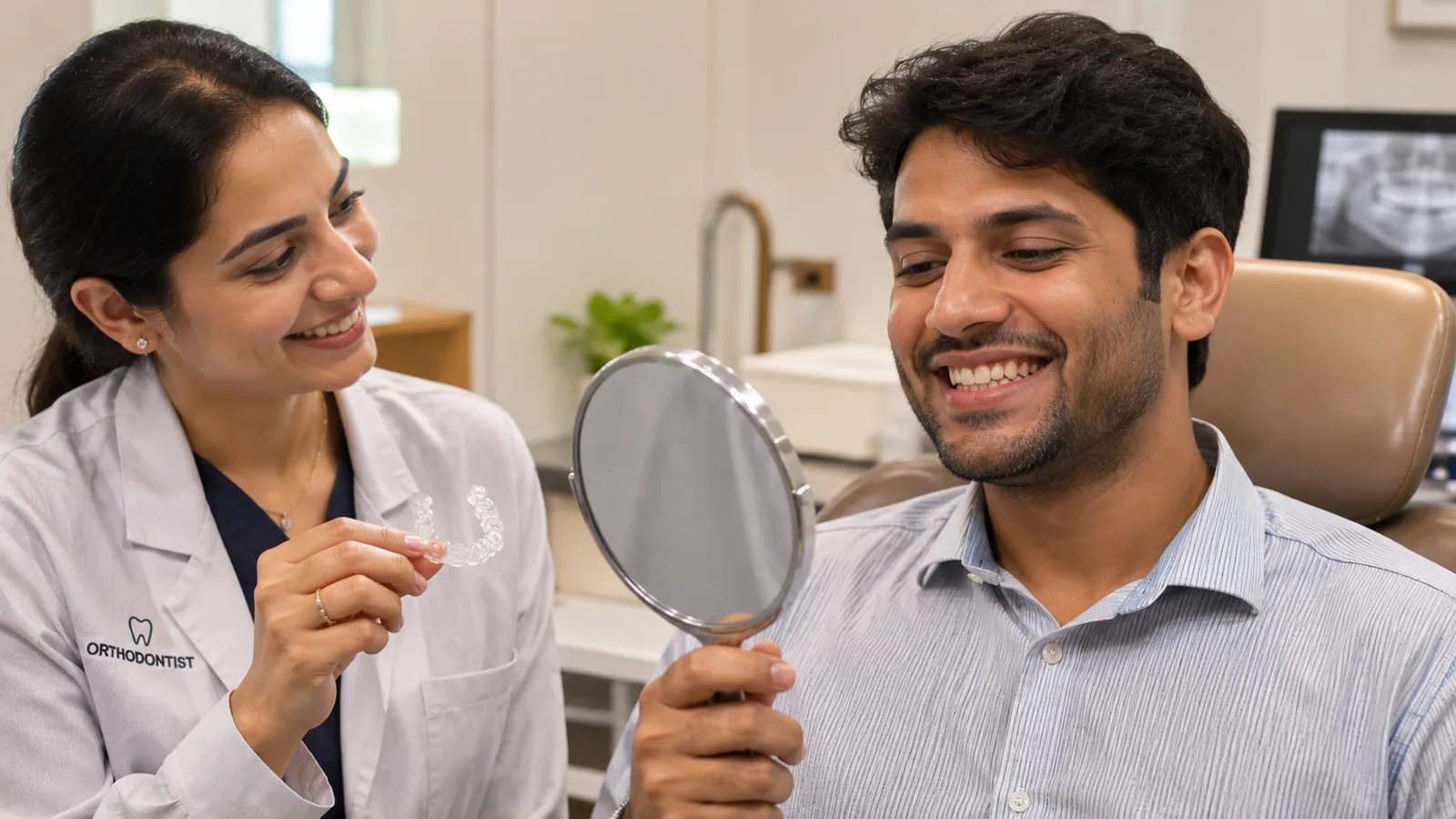
Best for: mild to moderate crowding, gaps, crossbites, overbites and teeth that moved back after old braces. Many complex cases too.
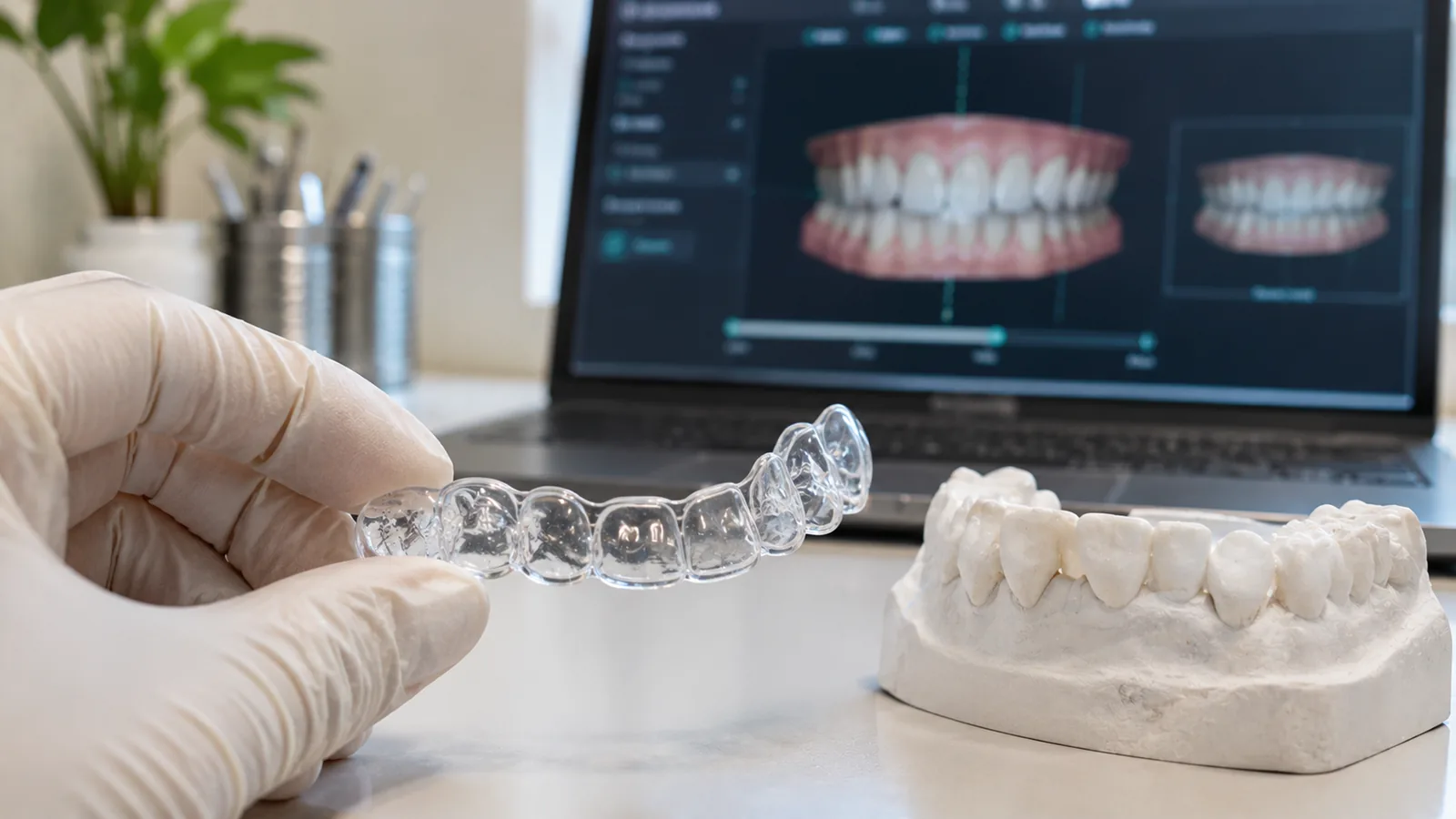
Invisalign uses a series of clear, custom trays that gently move your teeth a little at a time. You switch to a new set every one to two weeks.
Why adults love it:
- Almost invisible. Most people won't notice in meetings or photos.
- Removable. You take them out to eat, so no food restrictions.
- Easy to brush and floss normally.
- Fewer clinic visits, usually a short review every six to eight weeks.
- You see a 3D preview of your final result before you start.
What to know:
- You must wear them 20 to 22 hours a day. If they spend more time in the case than in your mouth, treatment takes longer.
- Mild pressure for a day or two with each new set.
- A retainer is needed afterwards to stop teeth moving back.
- Usually takes 6 to 18 months, depending on your case.
Designer Smiles is a certified Invisalign® Provider, and treatment is planned and supervised by our orthodontist. Our Invisalign cost guide explains pricing in detail.
Option 2: Braces
Best for: almost every case, including severe crowding, big bite problems and complex tooth movements.
Braces use brackets fixed to the teeth and a wire that's adjusted over time. They're the most proven way to move teeth.
Choices for adults:
- Metal braces. Most affordable and very effective.
- Ceramic braces. Tooth-coloured brackets that are much less noticeable.
What to know:
- Visible, though ceramic is subtle
- Need to avoid hard, sticky and chewy foods
- Cleaning takes more effort
- Regular adjustment visits
- Usually take 12 to 24 months for adults
- Generally cost less than Invisalign
If your case is complex, our orthodontist will tell you honestly if braces are the better choice for you.
Option 3: Veneers
Best for: mildly crooked front teeth, especially if you also want to change the colour, shape or size.
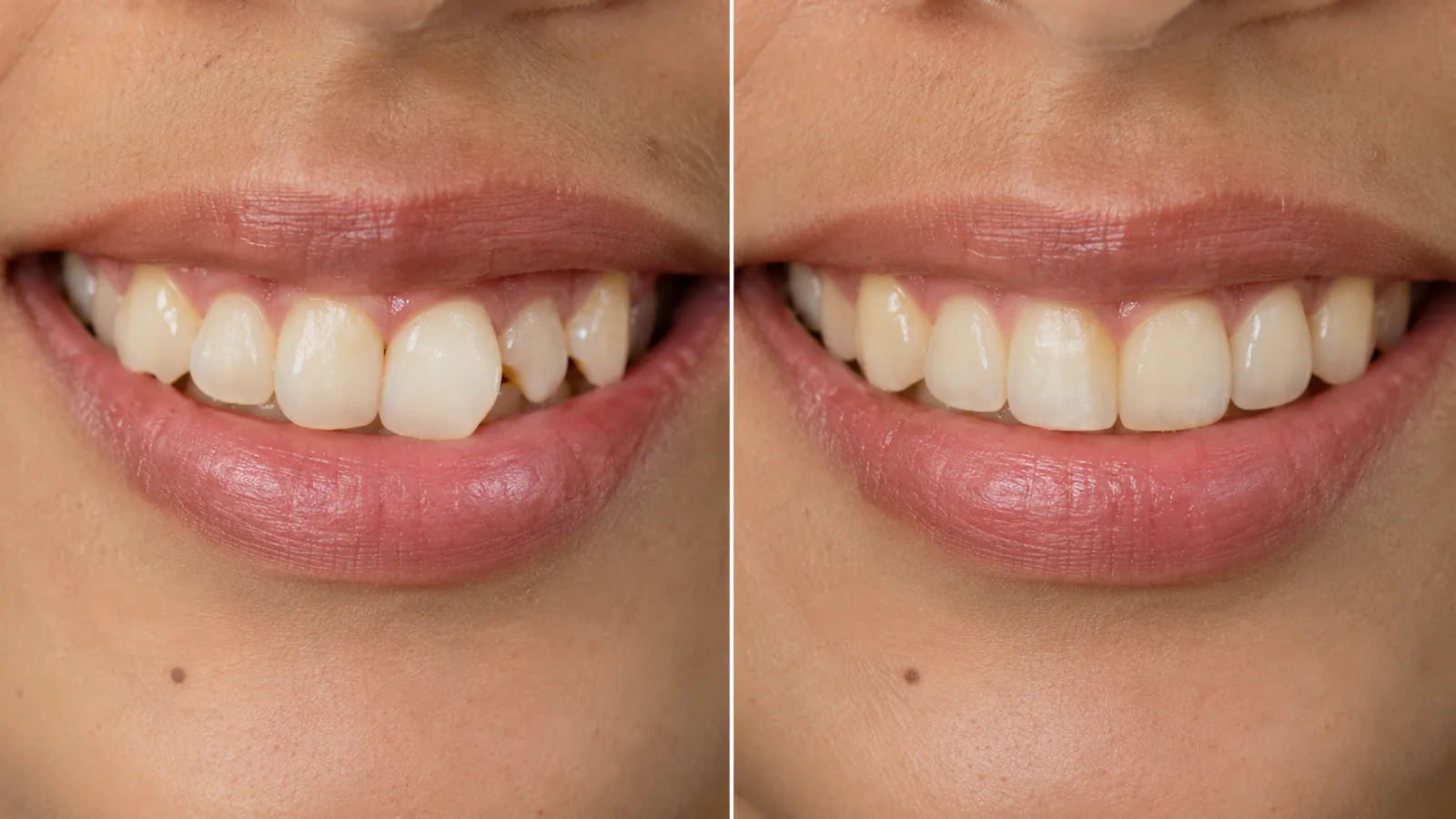
Veneers don't move your teeth. Instead, thin custom shells are fixed on the front surface to create the look of straight, even teeth. That's why people call them "instant orthodontics."
Why people choose them:
- Fast. Usually done in 1 to 3 weeks.
- Fixes crookedness, stains, chips and uneven edges all at once.
- Porcelain veneers last 10 to 15 years or more with good care.
What to know:
- Only works for mild crookedness. Badly crooked teeth need to be moved first, or the veneers will look bulky.
- Porcelain veneers usually need a thin layer of enamel shaped. That part can't be undone.
- Doesn't fix bite problems.
At Designer Smiles, composite veneers start from ₹10,000 per tooth and porcelain veneers from ₹15,000 per tooth. Our veneers cost guide compares the types.
Option 4: Composite bonding
Best for: very small overlaps, a slightly uneven edge, or one tooth that looks a little out of line.
The dentist adds tooth-coloured resin and shapes it by hand to even things out. It's quick, often done in one visit, and needs little or no drilling.
It won't fix real crowding, but for tiny imperfections it can make a surprising difference. Read more about composite bonding.
Option 5: The combination approach
For many adults, the best result comes from combining treatments. A common plan looks like this:
- Aligners to move the teeth into a better position
- Teeth whitening to brighten the shade
- A little bonding or a few veneers to perfect the shape of the front teeth
This way, fewer teeth need veneers, less enamel is removed, and the final result looks more natural. It's the kind of plan we put together as part of a smile makeover.
Side by side comparison
| Invisalign | Braces | Veneers | Bonding | |
|---|---|---|---|---|
| Moves teeth? | Yes | Yes | No, covers them | No, reshapes them |
| Best for | Mild to complex cases | All cases, including severe | Mildly crooked front teeth | Tiny overlaps and edges |
| Visible? | Almost invisible | Yes (ceramic less so) | No, looks like natural teeth | No |
| Time | 6 to 18 months | 12 to 24 months | 1 to 3 weeks | Often 1 visit |
| Changes tooth surface? | No | No | Yes, usually a thin layer | Adds material |
| Fixes bite problems? | Many | Yes | No | No |
| Lasts | Permanent with retainers | Permanent with retainers | 10 to 15+ years (porcelain) | About 5 to 7 years |
| Starting price at Designer Smiles | From ₹50,000 | Personalised after consultation | From ₹10,000 per tooth | Personalised after consultation |
Swipe to see more →
How to fix crooked teeth without braces
If "without braces" means "without metal brackets," you have three good options:
- Invisalign. The teeth still move, just with clear removable trays instead of brackets and wires.
- Veneers. The teeth stay where they are, but look straight.
- Bonding. For very small corrections.
A word of caution about at-home aligner kits. Moving teeth is a medical treatment. If gum problems, hidden decay or a bite issue are missed before you start, aligners can make things worse. Always get an in-person examination and X-rays first.
And please don't try DIY fixes like rubber bands, hair ties or pushing teeth with your fingers. These can damage the gums and bone, and in some cases lead to tooth loss.
Which treatment is right for you?
A simple guide:
- "My teeth are crowded or twisted, and I want them actually straight." Invisalign or braces.
- "I want the most discreet option." Invisalign.
- "My case is complex, and budget matters." Braces.
- "My teeth are only slightly crooked, and I'd also like them whiter and more even, quickly." Veneers.
- "There's just one small edge or overlap that bothers me." Bonding.
- "I want the best, most natural looking result." Usually aligners first, then minor cosmetic touches.
Is it too late to straighten teeth as an adult?
No. There's no upper age limit for moving teeth. We regularly treat patients in their 30s, 40s, 50s and beyond.
What matters more than age:
- Healthy gums. Any gum disease needs treatment first.
- Enough bone support around the teeth.
- Commitment. Wearing aligners as advised, and wearing retainers afterwards.
Adult treatment can sometimes take a little longer than teen treatment, because adult bone is denser. But the results are just as good.
How teeth straightening works at Designer Smiles
- Consultation. Our orthodontist checks your teeth, bite, gums and jaw, and takes digital X-rays.
- 3D scan. A quick digital scan of your teeth. No messy impression trays.
- Your options. Aligners, braces, veneers or a combination, explained honestly, with timelines and costs.
- 3D preview. For Invisalign, you see how your teeth are planned to move before you commit.
- Treatment. In a private room, with our Signature Comfort Menu: your own music, a fleece blanket, a warm towel and neck massage afterwards, and a cup of Kashmiri Kahwa.
- Retainers. To keep your new smile in place for good.
Because we're a multispeciality clinic, your orthodontist, periodontist and cosmetic team work together under one roof. That makes combined plans much simpler.
Dr. Kavita Bhat Kumar leads the clinic. She trained in aesthetic dentistry in Germany, has been practising in Vile Parle East since 1995, and was featured in Forbes India's 2026 series on leading dentists in India.
Ready for a straighter smile?
The first step is a consultation and scan. You'll find out which option suits your teeth, how long it will take, and exactly what it will cost, in writing.
Designer Smiles
Shop No. 5, Samikaran, Sant Janabai Road, Off Hanuman Road, Vile Parle East, Mumbai 400057
Phone and WhatsApp: +91 98206 43274
Open 7 days, 10 AM to 8 PM
Easy to reach from Vile Parle West, Andheri, Santacruz, Juhu and Bandra.
Book a consultation or message us on WhatsApp
Related reading: Invisalign Cost in Mumbai: What You Will Really Pay · Gap Between Front Teeth: 5 Ways to Close It
This article is for general information. Every smile is different, so please get a personal examination before starting any treatment.
Frequently Asked Questions about Crooked Teeth Treatment
Yes. Adults of any age can straighten their teeth with Invisalign, braces, veneers or bonding, as long as their gums and bone are healthy.
Invisalign clear aligners move teeth without metal brackets. Veneers can make mildly crooked teeth look straight without moving them. Composite bonding can fix very small overlaps or uneven edges.
Invisalign usually takes 6 to 18 months, and braces 12 to 24 months for adults. Veneers can be done in 1 to 3 weeks, and bonding often in a single visit.
At Designer Smiles, Invisalign starts from ₹50,000 for the full treatment, composite veneers from ₹10,000 per tooth and porcelain veneers from ₹15,000 per tooth. Braces and bonding are priced after consultation. You get a written cost before treatment starts.
For most mild to moderate cases, Invisalign works just as well and is far more discreet. For very complex cases or severe bite problems, braces may work better. Your orthodontist will advise based on your teeth.
Veneers can hide mild crookedness and make teeth look straight. For moderately or severely crooked teeth, it's better to straighten them first with aligners or braces.
They can, if you don't wear a retainer. Teeth naturally try to drift back. Wearing your retainer as advised keeps them straight long term.
Not much. Aligners and braces cause mild pressure or tightness for a day or two after each change. Veneers and bonding are done with local anaesthesia where needed.
Teeth naturally shift slightly throughout life, and the lower front teeth often get more crowded with age. Not wearing retainers after braces, missing teeth and gum disease can also cause teeth to move.
They can. Overlapping teeth are harder to clean, which raises the risk of cavities and gum disease. A poor bite can also cause uneven wear and, for some people, jaw discomfort.
Not always. Many crowding cases can be treated without extractions, using small amounts of space created between teeth or by expanding the arch. Severe crowding sometimes needs a tooth removed. Your orthodontist will explain your options.
Yes. Teeth that moved back after old braces are one of the most common cases we treat, and Invisalign is often ideal for this.
Talk to Dr. Kavita about your smile.
Dr. Kavita Bhat Kumar
Founder, Designer Smiles · 30+ years of clinical experience
30+ years of experience · Aesthetic Dentistry, Germany · Invisalign® Provider · Life Member, ISOI · Featured in Forbes India 2026
Trained in aesthetic dentistry in Germany, Dr. Kavita has been caring for patients in Vile Parle East since 1995.
About Dr. Kavita →Keep reading
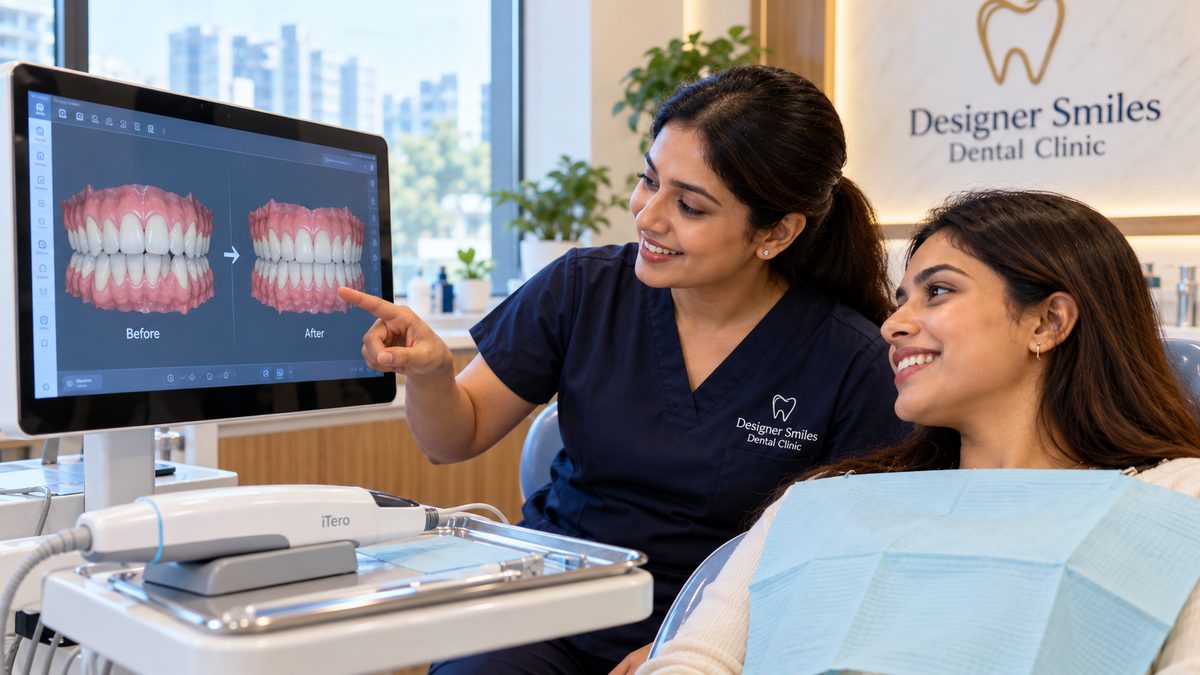
Orthodontics
Invisalign Cost in Mumbai: What You Will Really Pay, and Is It Better Than Braces?
You searched for the price of Invisalign. You got five websites and seven different numbers. One clinic says ₹80,000. Another says ₹3.5 lakh. A third just says "call us."
16 October 2026 · 10 min read
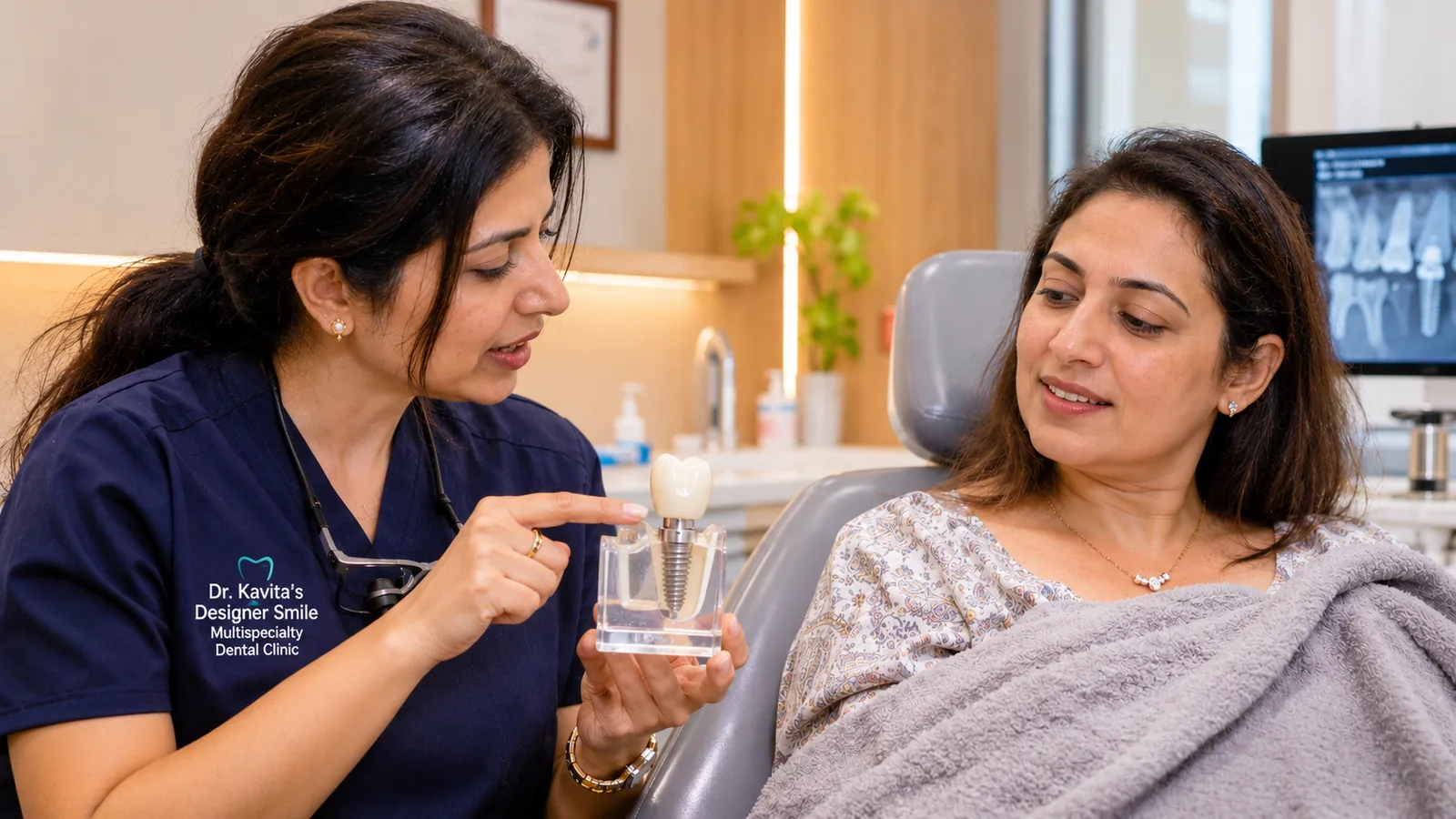
Dental Implants
Dental Implant Procedure Step by Step: Pain, Healing Time, Recovery and What to Eat
Most people who are thinking about a dental implant aren't worried about the cost first. They're worried about the procedure.
5 November 2026 · 11 min read
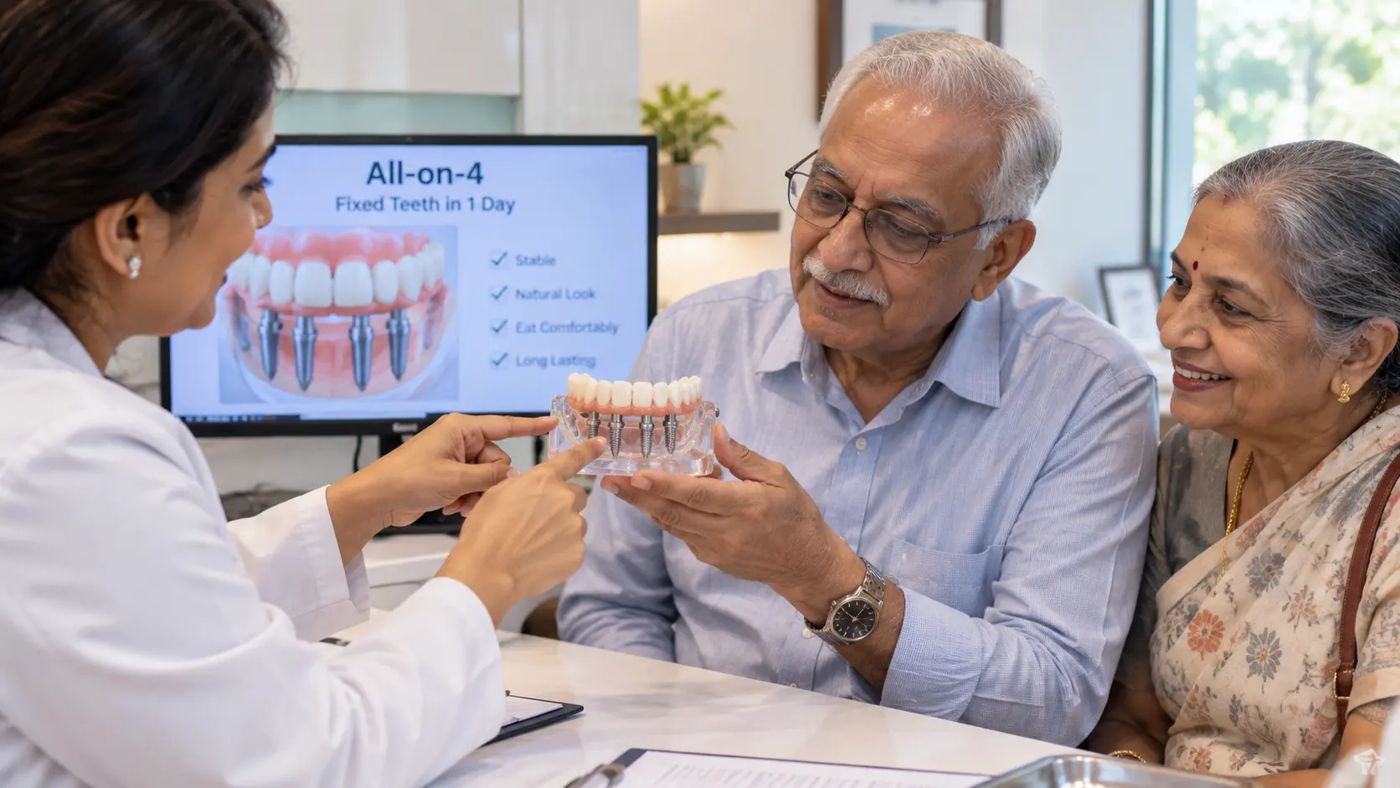
Dental Implants
Full Mouth Dental Implants in Mumbai: All-on-4 vs All-on-6, Cost and What to Expect
Most people who ask us about full mouth implants are tired of one thing: their dentures.
25 October 2026 · 10 min read
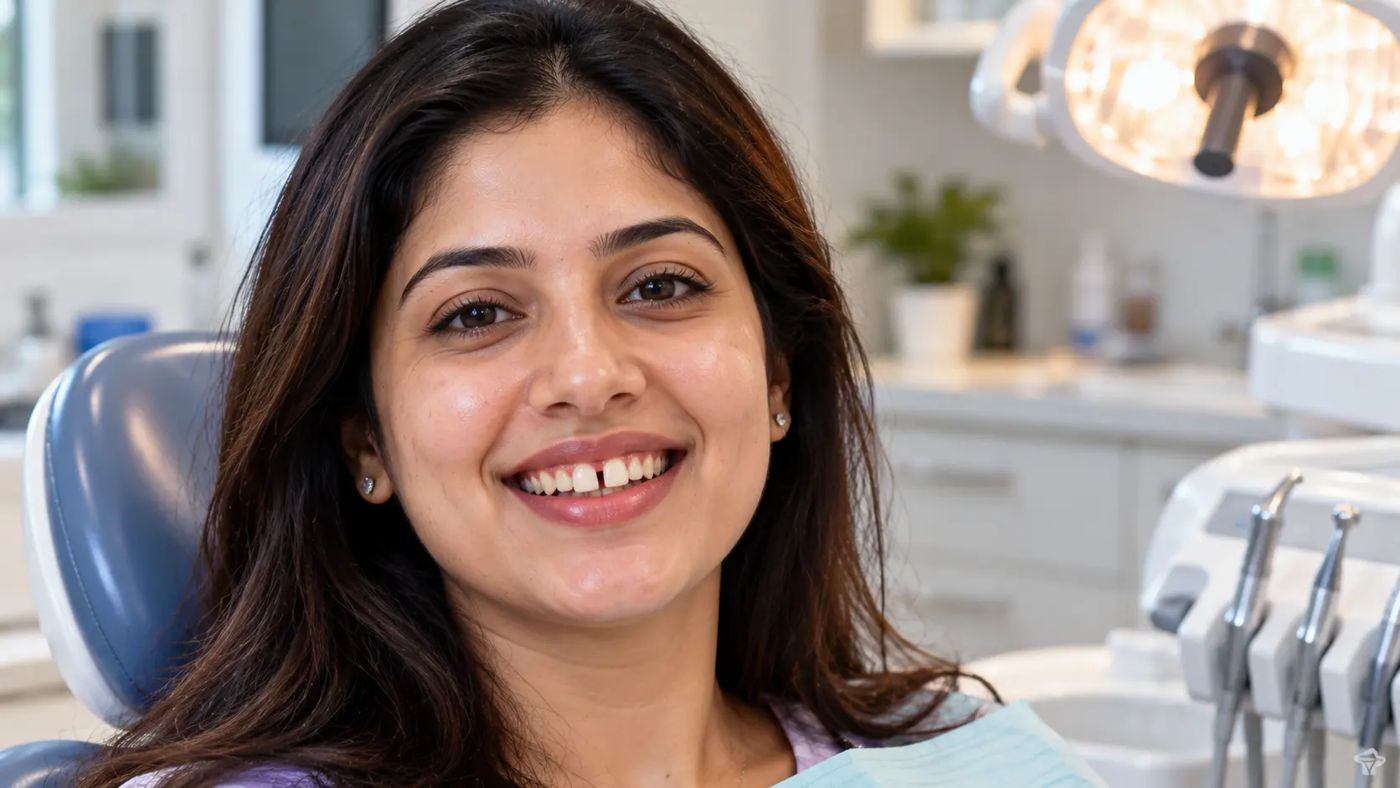
Cosmetic Dentistry
Gap Between Front Teeth: 5 Ways to Close It, and Which One Is Right for You
Some people love the gap in their front teeth. It's part of their face, and plenty of famous smiles have one.
25 October 2026 · 9 min read