Dental Implant Procedure Step by Step: Pain, Healing Time, Recovery and What to Eat
 By Designer Smiles Implant TeamMedically reviewed by Dr. Kavita Bhat Kumar11 min read

In this guide
- Quick answer
- First, what exactly is a dental implant?
- The dental implant procedure, step by step
- How long does the whole dental implant process take?
- Is a dental implant painful?
- Recovery: the first two weeks, day by day
- What to eat after a dental implant
- Possible side effects, and when to call us
- What affects implant healing and success
- Single implant, multiple implants, or full mouth?
- Dental implant cost at Designer Smiles
- Why patients choose Designer Smiles for dental implants
- Thinking about a dental implant?
Most people who are thinking about a dental implant aren't worried about the cost first. They're worried about the procedure.
"Will it hurt?" "How long will my face be swollen?" "Can I go to office the next day?" "What do I eat for the next few weeks?"
Those are fair questions. A dental implant is a small surgery, and nobody likes walking into something without knowing what happens next.
So this guide walks you through the whole thing, from the first consultation to the day your final tooth goes in. No jargon. Just what actually happens, what it feels like, and how to heal well.
First, what exactly is a dental implant?
A dental implant has three parts:
- The implant. A small screw-shaped post made of titanium. It goes into the jawbone and works like a new root.
- The abutment. A small connector that sits on top of the implant, just above the gum.
- The crown. The visible tooth. It's made to match the shape and shade of your other teeth.
The magic happens in the bone. Over a few months, the bone grows tightly around the titanium. This is called osseointegration. Once that's done, the implant is as firmly anchored as a natural root. That's why implants last so long, and why you can't rush the healing.
If you'd like a deeper look at types, costs and success rates, our dental implants in Mumbai guide covers it in detail.
The dental implant procedure, step by step
Step 1: Consultation and digital imaging
This is where everything gets decided. Our implant team checks:
- The tooth or gap that needs replacing
- Your gums, for any infection or gum disease
- Your bite, and how your teeth meet
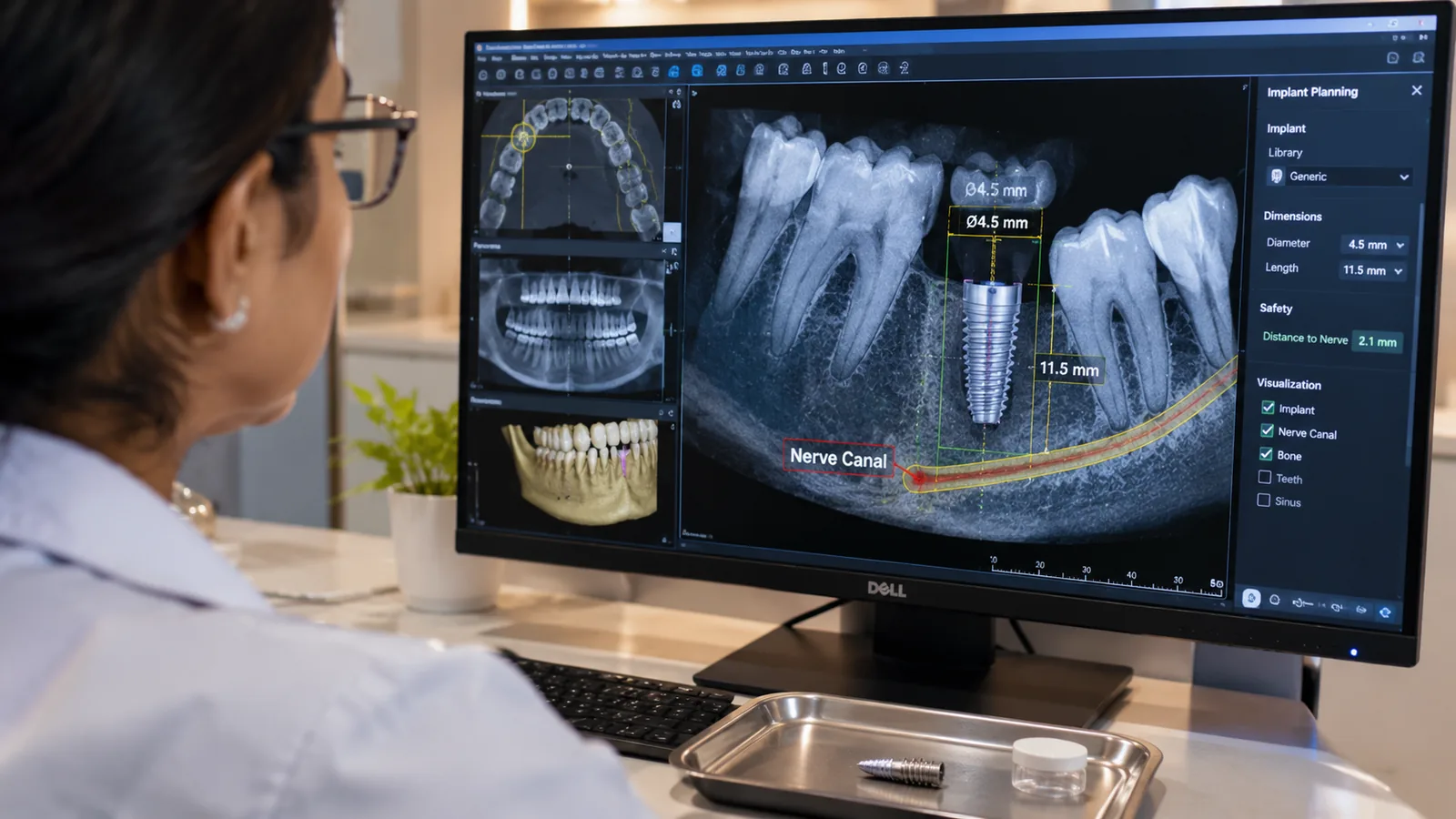
- Your bone, using digital X-rays or a 3D scan
The scan is the most important part. It shows how much bone you have, how thick it is, and where nerves and the sinus sit. That decides the size of the implant, its angle, and whether you need a bone graft first.
You'll also be asked about your health. Bring a list of any medicines you take, especially blood thinners, diabetes medicines or anything for bone health.
By the end of this visit you should know which type of implant suits you, how long it will take, and the cost in writing.
Step 2: Treatment planning
Your implant isn't placed by guesswork. Using your scan, the position, depth and angle of the implant are planned in advance. The shade and shape of your future tooth are noted too.
If you have gum disease, it's treated first. If a tooth needs to come out, the plan covers whether the implant can go in the same day or whether the area needs to heal first.
Step 3: Tooth removal (if needed)
If a damaged tooth is still in place, it's removed gently under local anaesthesia. The aim is to protect the bone and gum around it, because the implant will need that bone.
Depending on your case, one of two things happens next:
- Immediate implant: the implant goes into the fresh socket in the same visit. This suits people with healthy bone and no active infection. Read more about immediate dental implants.
- Delayed implant: the socket heals for a few weeks or months first, and the implant is placed later.
Step 4: Bone grafting or sinus lift (only if needed)
Not everyone needs this. But if you lost the tooth a long time ago, the bone in that spot may have shrunk.
- Bone graft: bone material is added to build up a thin or weak area. It's often done in the same sitting as the implant.
- Sinus lift: for upper back teeth, the floor of the sinus is gently lifted to make room for new bone.
Both add some healing time, but they make an implant possible where it otherwise wouldn't be.
Step 5: Placing the implant
This is the part most people worry about. Here's what it's actually like.
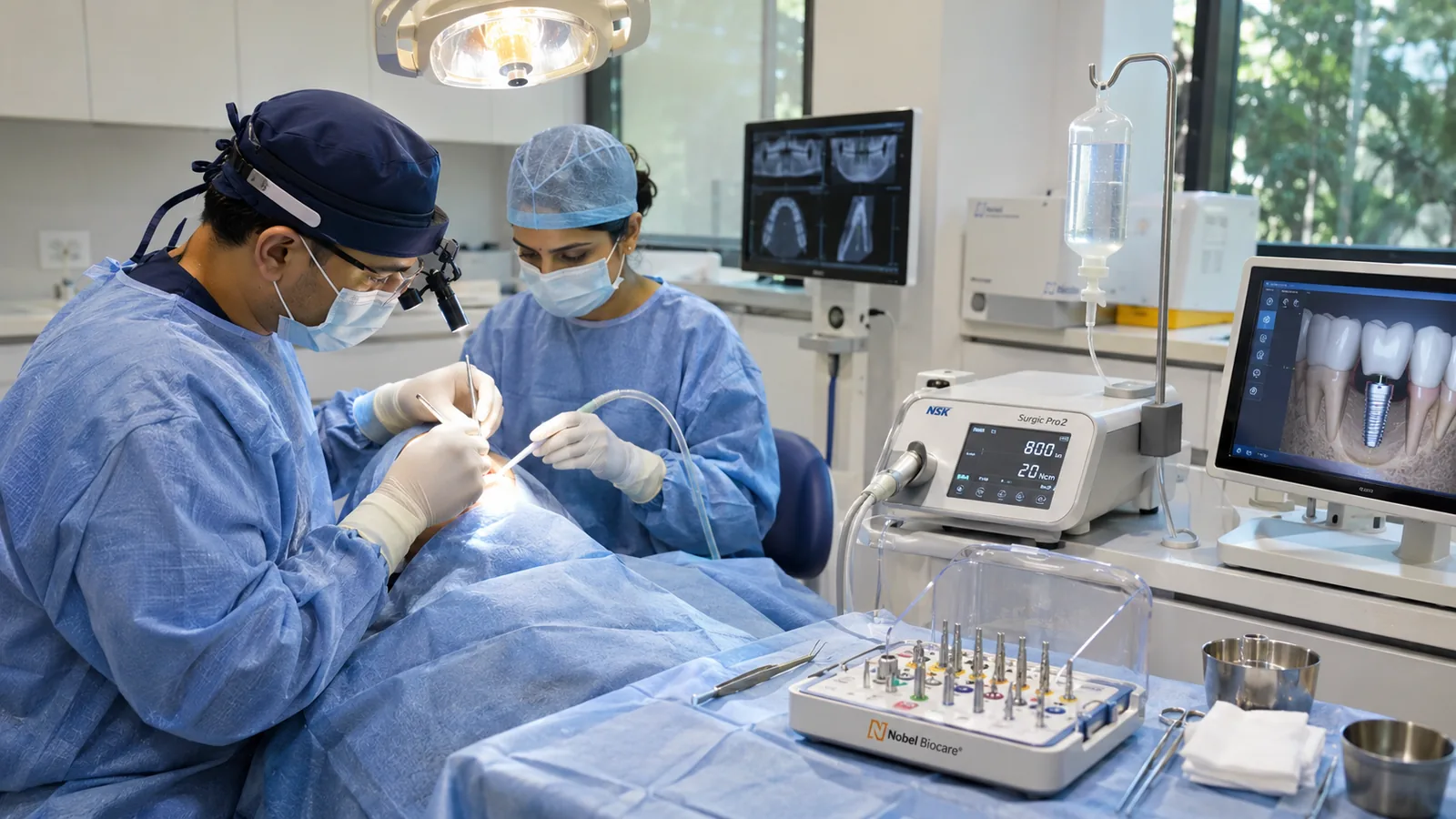
- The area is numbed with local anaesthesia. You stay awake, but you won't feel pain. You may feel some pressure or vibration.
- A small opening is made in the gum. Where clinically suitable, we use flapless placement, which avoids cutting and lifting the gum and often means no stitches.
- A small, precise space is prepared in the bone.
- The implant is placed and checked for firmness.
- Either a healing cap goes on top, or the gum is closed over the implant to let it heal undisturbed.
For a single implant, the surgery itself often takes less than an hour. You'll be told exactly how your day will go before you start.
At Designer Smiles, implant systems are chosen to suit your case. We work with established brands including Nobel Biocare® and Straumann®.
Step 6: Temporary tooth (in suitable cases)
Nobody wants to walk around with a gap in their front teeth for months. If your implant is firm enough on the day, a temporary tooth can be attached the same day or within 24 hours. It's shaped so you don't bite heavily on it while the implant heals.
If immediate loading isn't safe for your case, you may get a removable temporary tooth instead. For back teeth, many people simply leave the gap for a few months, since it isn't visible.
Step 7: Healing and bonding with the bone
This is the waiting part, and it matters most. Over about 3 to 6 months, the bone grows around the implant and locks it in place.
You won't feel this happening. Life goes on as normal. You just need to keep the area clean, eat carefully on that side, and come in for review visits.
If the gum was closed over the implant, a short second step is done once healing is complete. The gum is opened slightly and a healing cap is placed. This is quick and usually causes only a day of mild tenderness. Our two-stage implants page explains this approach.
Step 8: Fitting the final crown
Once the implant is fully bonded, a digital scan is taken and your final crown is made. At Designer Smiles, this is often a precision BruxZir® zirconia crown when clinically appropriate, matched to your natural teeth.
The crown is fitted, your bite is checked and adjusted, and that's it. You can now chew normally on it.
Step 9: Aftercare and check-ups
An implant can't get a cavity, but the gum and bone around it still need care. Regular check-ups and cleaning keep it healthy for the long run.
How long does the whole dental implant process take?
| Stage | Typical time |
|---|---|
| Consultation and scan | 1 visit |
| Implant surgery (single implant) | Usually 30 to 90 minutes |
| Temporary tooth (if suitable) | Same day to 24 hours |
| Soreness and swelling | About 2 to 4 days |
| Back to office work | Usually 1 to 2 days |
| Soft diet on the treated side | First few weeks, up to 6 to 8 weeks with an immediate tooth |
| Healing and bone bonding | About 3 to 6 months |
| Final crown | After healing is complete |
| Extra time if bone graft or sinus lift | A few more months |
Swipe to see more →
Overall, most single implants take about 3 to 6 months from start to final tooth. You'll need around 3 to 5 visits in total, and most of them are short.
Is a dental implant painful?
During the procedure, no. The area is completely numb.
After the anaesthesia wears off, most people feel:
- Mild soreness or a dull ache around the area
- Some swelling of the gum, and sometimes the cheek
- Slight bruising in a few cases
- Minor bleeding or pink saliva for the first day
This usually settles within 2 to 4 days and is easily managed with the medicines you're prescribed. Many patients tell us it was easier than a difficult tooth extraction.
At Designer Smiles, we rarely see much swelling, especially when flapless placement is possible. But everyone heals differently, so plan a quiet day after surgery anyway.
If dental treatment makes you nervous, our Signature Comfort Menu helps a lot: noise-cancelling earphones with your own music, an eye mask, a fleece blanket, and a warm towel and neck massage afterwards. And yes, ice cream after surgical procedures to keep the area cool. Our guide on dental anxiety has more tips.
Recovery: the first two weeks, day by day
Day 1 (surgery day)
- Rest. Don't plan a big meeting or a workout.
- Apply an ice pack on the cheek, 15 minutes on and 15 minutes off, for the first few hours.
- Take your medicines exactly as prescribed.
- Eat only cool, soft food once the numbness wears off.
- Don't rinse hard, spit forcefully, or use a straw.
Days 2 to 3
- Swelling usually peaks around now, then starts going down.
- Start gentle saltwater rinses or the mouthwash you were given.
- Brush your other teeth normally. Be gentle around the implant.
- Most people are back at desk work.
Days 4 to 7
- Soreness fades. You'll feel mostly normal.
- Keep eating soft food on the other side.
- If you had stitches, they're usually checked or removed around now.
Week 2 onwards
- Life is mostly back to normal.
- Keep avoiding hard, crunchy food on the implant side.
- Keep your review appointments.
What to eat after a dental implant
First 24 to 48 hours: cool and soft
- Curd and buttermilk
- Smoothies (eaten with a spoon, not a straw)
- Cold kheer or custard
- Ice cream
- Mashed banana
- Cool, thin soups and dal (not hot)
First few weeks: soft food
- Khichdi and dal rice
- Upma, poha and soft idli
- Soft dosa, without the crispy edges
- Scrambled eggs or omelette
- Paneer bhurji
- Well-cooked vegetables
- Soft fish
- Pasta and noodles
- Dal and soft sabzi with soft roti
Avoid until your dentist says it's okay
- Nuts, chikki and hard sweets
- Popcorn
- Chips and crunchy snacks
- Hard or chewy meat
- Biting into apples, corn or hard roti with an implant tooth
- Very hot or very spicy food in the first few days
- Alcohol, especially while you're on medicines
Once your final crown is fitted, you can go back to eating normally.
Possible side effects, and when to call us
Normal after an implant:
- Mild pain or soreness for a few days
- Swelling and slight bruising
- Light bleeding on the first day
- A little tenderness when touching the area
Call your dentist if you notice:
- Pain that gets worse after day 3 instead of better
- Swelling that keeps increasing after 3 to 4 days
- Bleeding that doesn't stop with gentle pressure
- Pus, a bad taste or a bad smell from the area
- Fever
- The implant or temporary tooth feels loose
- Numbness that lasts long after the anaesthesia should have worn off
These are uncommon, but it's always better to check early. The Cleveland Clinic's guide on dental implants lists similar warning signs.
What affects implant healing and success
Implants have a very high success rate when the case is planned well. A few things make a real difference:
- Smoking. This is the big one. A 2021 systematic review found that implants in smokers had a much higher risk of failure than in non-smokers. If you smoke, stopping for at least a few weeks around surgery, ideally longer, helps a lot.
- Diabetes. Well-controlled diabetes is usually fine. Poorly controlled sugar slows healing.
- Gum disease. Needs to be treated before the implant.
- Teeth grinding. A night guard protects the implant once it's in.
- Oral hygiene. Clean around the implant like a natural tooth, with brushing, flossing or a water flosser.
- Skipping check-ups. Small problems caught early are easy to fix.
Single implant, multiple implants, or full mouth?
The steps above are for one implant, but the process is similar if you're missing more teeth.
- One or two missing teeth: individual implants, each with its own crown.
- Several teeth in a row: an implant-supported bridge, using fewer implants than teeth.
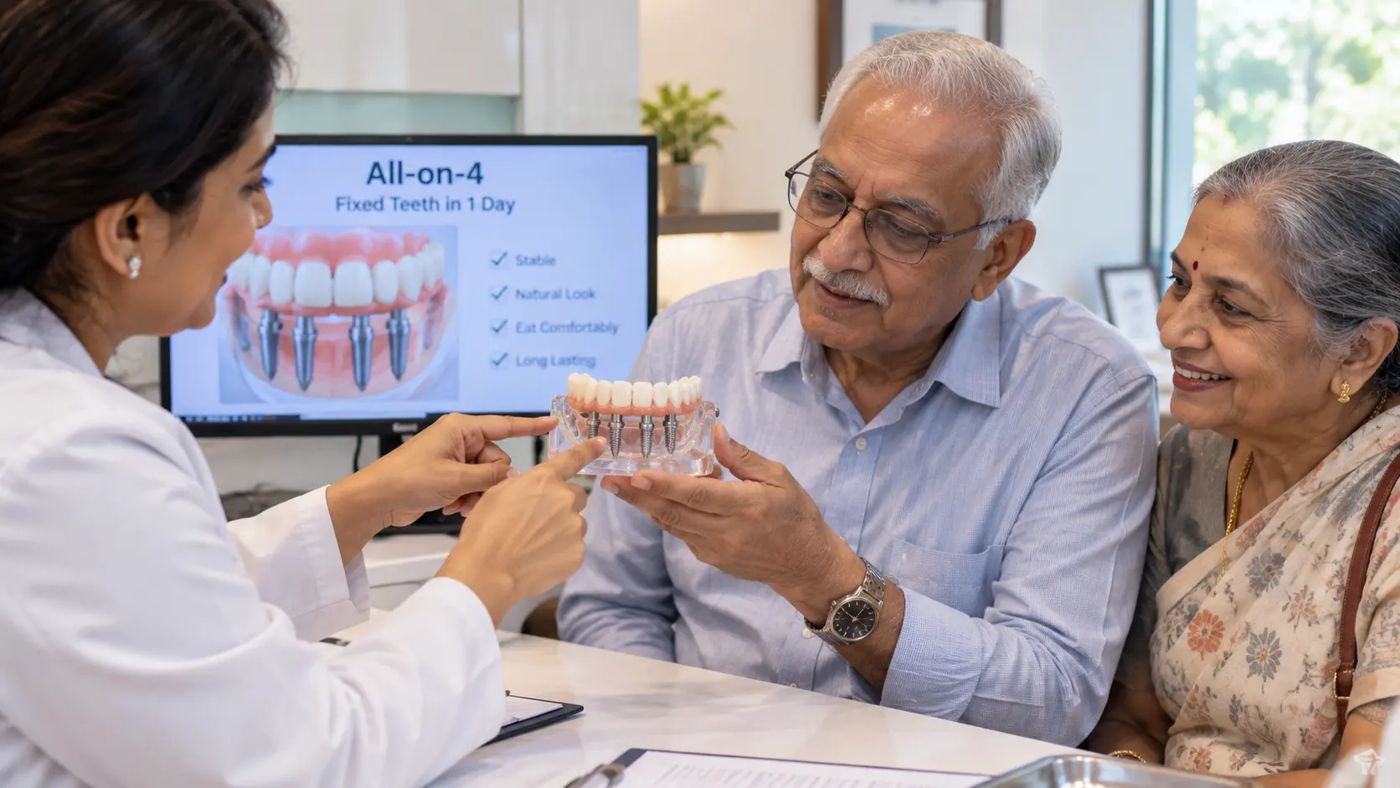
- Most or all teeth missing: All-on-4 or All-on-6, a full fixed arch on four or six implants. Our full mouth implants guide explains the difference.
Still deciding whether an implant is right at all? Read our comparison of dental implant vs bridge vs denture.
Dental implant cost at Designer Smiles
| Option | Starting price |
|---|---|
| Single dental implant | From ₹30,000 per implant |
| Implant-supported dentures | From ₹1 lakh per arch |
| All-on-4 dental implants | From ₹1.5 lakh per arch |
| All-on-6 dental implants | From ₹2 lakh per arch |
Swipe to see more →
Your final cost depends on the implant system, the type of crown, the number of implants, and whether bone grafting or a sinus lift is needed. You'll get a clear written cost after your consultation, with no hidden charges.
Why patients choose Designer Smiles for dental implants
- A dedicated implant team, with the clinic led by Dr. Kavita Bhat Kumar, a Life Member of the Indian Society of Oral Implantologists (ISOI), featured in Forbes India's 2026 series on leading dentists.
- 30+ years in Vile Parle East, since 1995.
- Digital imaging and careful planning before every implant.
- Flapless placement where suitable, for a gentler recovery.
- Established implant systems, including Nobel Biocare® and Straumann®.
- ISO 9001:2015 certified sterilisation, with a strict protocol for every implant case.
- 4.9★ from 800+ Google reviews.
- Open 7 days, 10 AM to 8 PM, a short walk from Vile Parle station and close to Mumbai's airport. Patients come from Andheri, Santacruz, Juhu, Bandra and beyond.
Find out more on our dental implants page.
Thinking about a dental implant?
The first step is a consultation and scan. You'll find out exactly which type of implant suits you, whether you need any bone work, how long it will take, and what it will cost, in writing, before you decide anything.
Designer Smiles
Shop No. 5, Samikaran, Sant Janabai Road, Off Hanuman Road, Vile Parle East, Mumbai 400057
Phone and WhatsApp: +91 98206 43274
Open 7 days, 10 AM to 8 PM
Book a consultation or message us on WhatsApp
Related reading: Dental Implants in Mumbai: Cost, Types, Success Rate and What to Actually Expect · Full Mouth Dental Implants: All-on-4 vs All-on-6
This article is for general information. Every mouth is different, so please get a personal examination and follow your own dentist's instructions after treatment.
Frequently Asked Questions about the Dental Implant Procedure
The surgery for a single implant usually takes about 30 to 90 minutes. The full process, from placing the implant to fitting the final crown, usually takes 3 to 6 months because the implant needs time to bond with the jawbone.
The procedure is done under local anaesthesia, so you shouldn't feel pain during it. Afterwards, mild soreness and swelling for 2 to 4 days is normal and is easily managed with prescribed medicines.
Most people go back to office work within one or two days. If your job is physically demanding, take two or three days off.
For the first day or two, eat cool, soft food like curd, smoothies, kheer and mashed banana. For the next few weeks, stick to soft food like khichdi, upma, idli, eggs and dal rice, and avoid hard or crunchy food on the implant side.
In suitable cases, yes. If you have healthy bone and the implant is firm on the day, a temporary tooth can be fitted the same day or within 24 hours. The final crown is fitted after healing.
Usually 3 to 5 visits in total: consultation, surgery, one or two review visits, and the final crown fitting. More visits may be needed if bone grafting is involved.
It's strongly advised not to. Smoking slows healing and significantly raises the risk of the implant failing. Avoid it for as long as you can, at least for the first few weeks.
Avoid alcohol for at least the first few days, and while you're taking prescribed medicines. It can slow healing and interact with some medicines.
Not always. A bone graft is needed only if your bone is too thin or weak to hold the implant. Your 3D scan will show whether you need one.
Usually yes, if your diabetes is well controlled. Your implant team may ask for recent sugar reports and coordinate with your doctor.
With good oral hygiene and regular check-ups, implants can last decades, often a lifetime. The crown on top may need replacing after many years of wear.
Pain that gets worse after a few days, swelling that keeps increasing, pus, a bad taste, fever, or a loose implant. Contact your dentist straight away if you notice any of these.
Usually yes, after a day or two, for a simple implant. If you had a sinus lift, you may be advised to wait longer. Ask your implant team before booking travel.
Talk to Dr. Kavita about your smile.
Medically reviewed by
Dr. Kavita Bhat Kumar
Founder, Designer Smiles · 30+ years of clinical experience
30+ years of experience · Aesthetic Dentistry, Germany · Invisalign® Provider · Life Member, ISOI · Featured in Forbes India 2026
Trained in aesthetic dentistry in Germany, Dr. Kavita has been caring for patients in Vile Parle East since 1995.
About Dr. Kavita →Keep reading
Dental Implants
Full Mouth Dental Implants in Mumbai: All-on-4 vs All-on-6, Cost and What to Expect
Most people who ask us about full mouth implants are tired of one thing: their dentures.
25 October 2026 · 10 min read
Dental Implants
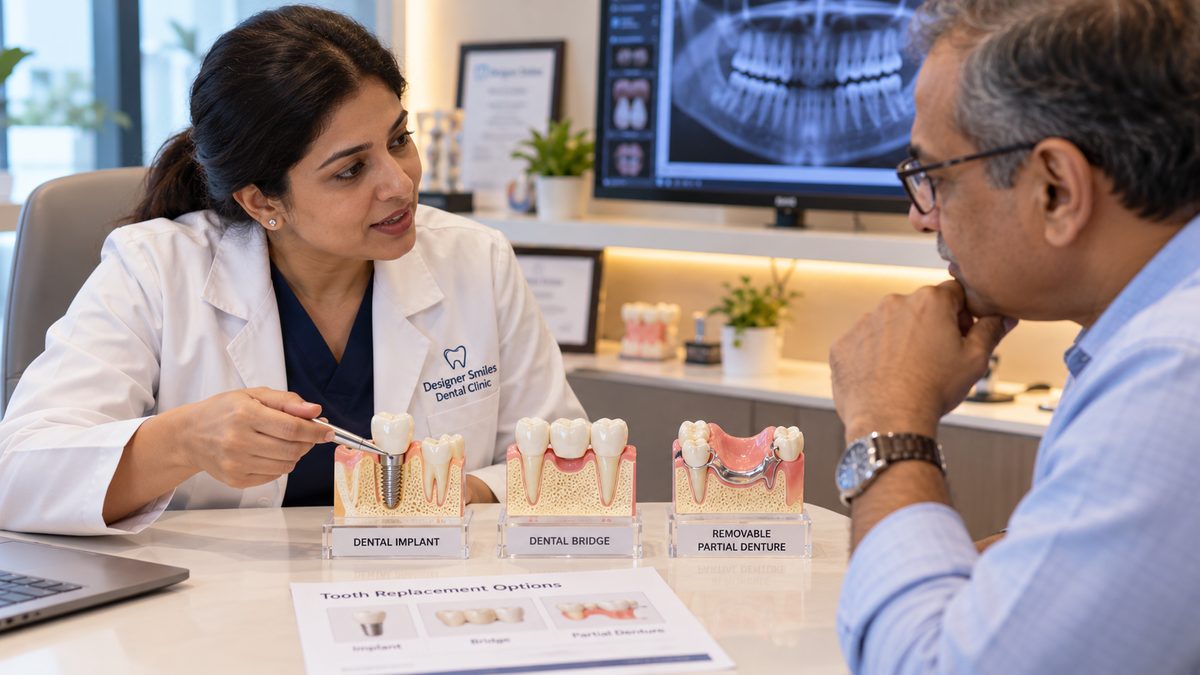
Dental Implant vs Bridge vs Denture: Which Is Right for Your Missing Tooth?
Losing a tooth is more common than people admit. A cracked molar that could not be saved. A front tooth lost in an accident. Gum problems that slowly loosened a tooth over the years.
16 October 2026 · 10 min read
Dental Implants
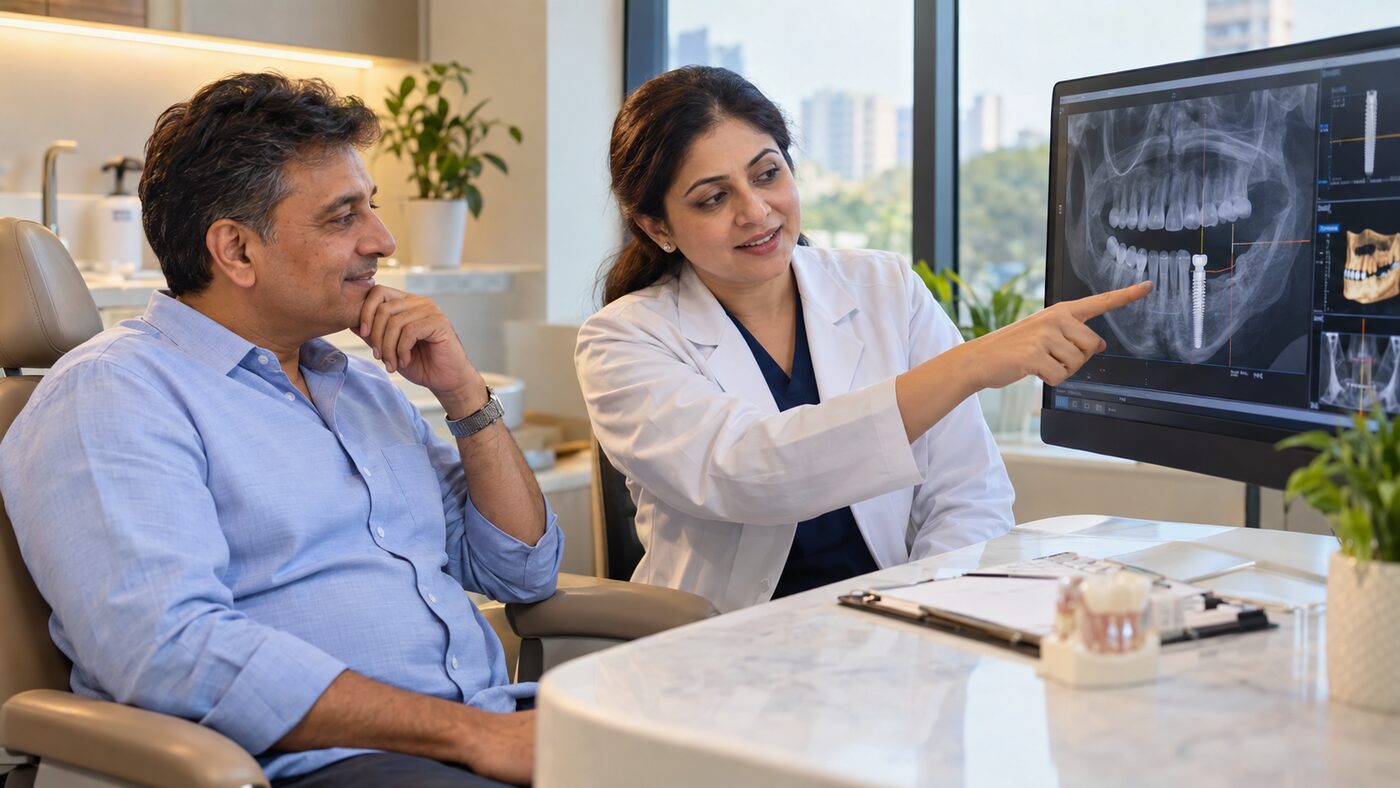
Dental Implants in Mumbai: Cost, Types, Success Rate and What to Actually Expect
If you are reading this, there is a good chance you have a gap in your smile, a tooth that is about to be removed, or a denture that has never quite felt right. You have probably also heard three very different things about dental implants: that they are the best tooth replacement available, that they are painful, and that they cost a fortune.
28 September 2026 · 11 min read
Orthodontics
Crooked Teeth Treatment for Adults: How to Fix Crooked Teeth With or Without Braces
A lot of adults have the same story.
5 November 2026 · 10 min read